

I grew up invisible in my own home — like a shadow that moved from room to room but was never truly seen. I was the leftover piece from my father’s first marriage, the quiet reminder of a life that had ended too soon.
So years later, when my stepmother died and I learned what she had left me, I was the most shocked person in the room.
When the lawyer slid the thick envelope across the polished mahogany desk, my hands turned cold and damp. The wood beneath my fingers felt too smooth, too steady, compared to the storm rising inside me. I had expected a simple will reading. Maybe a small keepsake. Maybe nothing at all.
What I did not expect was to walk out as the sole heir of a three-million-dollar house that had never once felt like mine.
But before I tell you how that inheritance shattered relationships I thought I had buried years ago, I need to take you back to the day my life first split in two.
I was ten when my mother died.
One day she was standing in the kitchen, humming softly while stirring her famous chicken soup. The house smelled of garlic and warmth. The next day, she was gone. An illness swept through our lives like a thief in the night and stole her without warning.
After her funeral, silence swallowed our home. It wasn’t normal quiet. It was heavy, suffocating quiet. My father and I sat across from each other at dinner, barely touching our food.
“We’ll be okay,” he whispered one night, reaching across the table to squeeze my hand. His voice shook. “It’s just us now.”
And for a while, it really was just us — two broken people clinging to each other like survivors of a shipwreck.
Two years later, he remarried.
Her name was Helen.
To outsiders, she was the picture of elegance. Her hair was always perfect. Her suits were pressed sharp and clean. A soft cloud of expensive perfume followed her everywhere she went. People admired her.
But to me?
She was a wall.
I remember the first night she walked into our home as my father’s wife. She didn’t come alone. She brought her three children: Lisa, Emily, and Jonathan.
They were loud. Confident. They walked through the house like they were already measuring the space as their own. Like a pack of wolves claiming new territory.
“This is Anna,” my father said proudly, resting his hand on my shoulder. “My daughter.”
Lisa, the oldest, looked me up and down slowly. Her lip curled slightly. “She’s… quiet,” she said, like it was an insult.
“She’s shy,” Helen corrected quickly, smiling — but her eyes were cold. She leaned down toward me. “You’ll get along with my kids just fine if you try, won’t you?”
“I’ll try,” I whispered.
But inside, I already knew the truth. I was an outsider in my own home.
From that day forward, dinner felt like a stage play where I had no lines. The spotlight shone brightly on Helen’s children — their piano recitals, their soccer trophies, their perfect report cards.
“Lisa got first place again,” Helen would beam.
“Emily’s teacher says she’s gifted,” she’d add proudly.
“Jonathan scored the winning goal!” my father would clap, trying to keep up with their energy.
And me?
I sat at the edge of the table, pushing food around my plate. Invisible.
Years passed like that.
When I turned eighteen, the weight finally crushed me. My father had already passed away by then. Losing him felt like losing the last person who saw me.
One night, I zipped up my suitcase with shaking hands.
“I can’t do this anymore,” I whispered to myself.
Leaving meant cutting ties not just with Helen, but with that painful chapter of my life. I walked out without looking back.
I never imagined I’d hear her name again.
Until the day I learned she was gone too.
And that’s when the real story began.
Nearly twenty years later, at thirty-eight, I had rebuilt myself into someone strong. You wouldn’t recognize the lonely girl who once slipped out of that house with tears in her eyes.
I had a husband who adored me. A steady job. A home that felt warm and safe. The ghosts of my childhood rarely visited anymore.
Until one night.
I dragged myself home from work, my muscles aching. I kicked off my heels by the door and dropped my bag onto the kitchen chair. I reheated leftovers in the microwave, staring at the spinning plate with tired eyes.
The quiet felt comforting.
I poured myself a glass of water and sat down.
Then my phone buzzed against the table.
An unknown number flashed on the screen. I almost ignored it. But something — intuition, maybe dread — made me answer.
“Hello?”
“Is this Anna?” The voice was calm. Professional.
“Yes…”
“My name is Mr. Whitman. I’m an attorney. I represent your stepmother, Helen.”
My fork froze in midair.
“Helen?” I whispered. The name felt like a ghost brushing past my ear.
“I’m very sorry to inform you,” he continued gently, “Helen has passed away. And you are required to attend the reading of her will.”
“I haven’t spoken to her in decades,” I blurted. “Why would you call me?”
“I can’t discuss details over the phone,” he said. “But your presence is necessary.”
My heart pounded. Every instinct screamed at me to say no. To protect the peaceful life I had built.
But curiosity tightened around me like a rope.
“Alright,” I finally said. “I’ll come.”
“You may be surprised at what Helen left behind,” he added quietly.
The following week, I drove to the law office with my hands gripping the steering wheel so tightly they hurt.
The building stood tall and serious — old brick, tall windows, shiny brass handles. I sat in my parked car for a long time.
“You can do this,” I whispered to my reflection.
Inside, the receptionist led me down a quiet hallway into a conference room.
And there they were.
Lisa crossed her arms the moment she saw me. Emily didn’t even look up from her phone at first. Jonathan muttered, “Unbelievable,” under his breath.
No one said hello.
I took a seat at the far end of the long mahogany table.
Mr. Whitman entered with a leather folder tucked under his arm.
“Thank you all for coming,” he said calmly. “We are here to read the last will and testament of Helen.”
The room went still.
He opened the folder.
“To my stepdaughter, Anna, I leave my residence on Lakeview Drive, valued at approximately three million dollars.”
The world tilted.
Then chaos exploded.
“What?!” Lisa jumped to her feet. “That’s ridiculous! She must have forged it!”
Jonathan leaned forward, fists clenched. “You weren’t even family! This is a scam!”
Emily slammed her phone down. “What did you do, Anna? Sneak in and twist her mind?”
“I didn’t do anything,” I finally managed to whisper. “I didn’t even know she was sick.”
“Let me finish,” Mr. Whitman said firmly.
“As for Helen’s biological children — Lisa, Emily, and Jonathan — each of you will receive four thousand dollars.”
“Four thousand?!” Lisa shrieked. “She spent more on a handbag!”
“She lost her mind!” Jonathan shouted.
“This is your fault!” Emily spat at me.
I sat there, frozen. I didn’t understand any of it.
When the meeting ended, I walked out without speaking.
But instead of going home, I drove to Lakeview Drive.
The gates were tall, black iron. Beyond them stood a mansion glowing in the late afternoon sun. Ivy climbed the stone walls. The porch stretched wide and welcoming.
“This… is mine?” I whispered.
Inside, the house smelled faintly of lavender polish. The grand staircase curved upward like something from a movie. Every room was immaculate.
And yet, it felt heavy.
I wandered until I reached her study — a room that had once been forbidden.
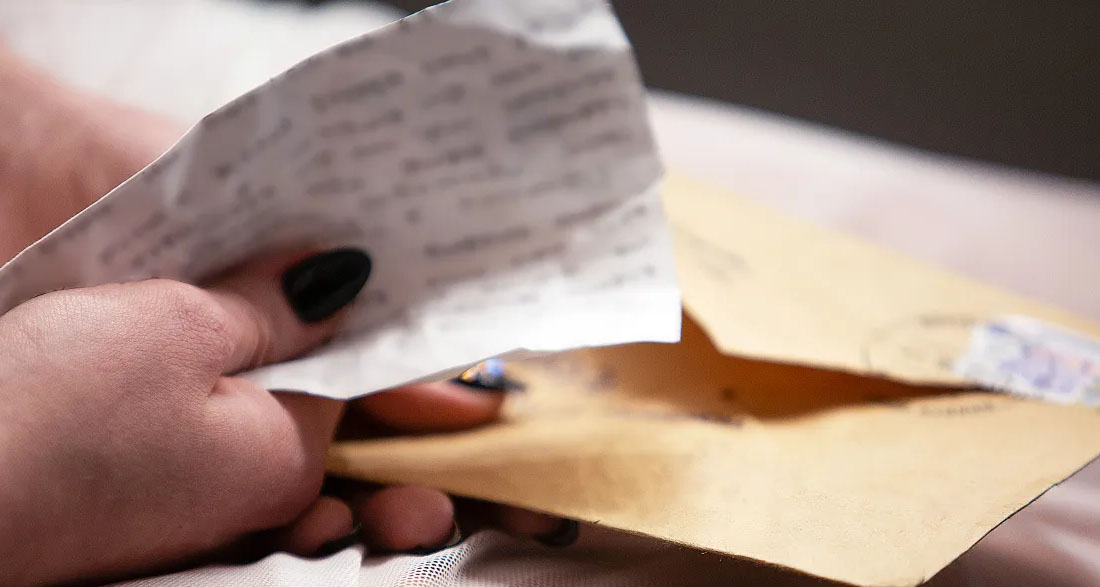
On the desk sat a sealed envelope.
My name was written in Helen’s elegant handwriting.
My hands shook as I opened it.
“Dear Anna,
If you are reading this, then my time has passed…”
She wrote about her children’s growing distance. Their hunger for money. She admitted her coldness toward me.
“I failed you,” she wrote. “You were quiet, excluded, yet resilient. I admired you for it.”
Tears blurred my vision.
“Leaving you this house is not about money. It is about giving you something I denied you when you were younger: a place where you belong.”
I broke down.
All those years, I believed she hadn’t seen me.
But she had.
Maybe too late. But she had.
Her children didn’t see it that way.
Lisa posted on Facebook: “She manipulated our mother!”
Jonathan left angry voicemails: “We’ll fight this until it’s overturned!”
Emily whispered to relatives, “She preyed on her when she was weak.”
But the will was airtight.
The house was mine.
At night, I stood by the lake outside the mansion. Moonlight shimmered on the water.
“A place where you belong,” I whispered.
The storm lasted weeks.
Lisa filled my inbox with rage. Jonathan pounded on the gates one evening, shouting, “You don’t deserve this!”
Emily painted me as a villain to anyone who would listen.
At first, their words hurt deeply.
But every night, I returned to the study. I read her letter again and again.
“You belong.”
Three words I had needed since I was ten.
I didn’t change my lifestyle. I didn’t buy expensive things.
Instead, I filled one upstairs room with books — a library of stories I had once only borrowed. On weekends, I invited friends over. We cooked simple meals. Laughter echoed through halls that had once been cold and silent.
Slowly, the house felt alive.
Eventually, Helen’s children stopped fighting. They couldn’t win.
Sometimes I sat by the lake, thinking of my father.
“She tried,” I whispered into the night. “In her own way.”
One evening, as I folded the letter and placed it back in the drawer, my husband stood in the doorway.
“You still read it every night,” he said softly.
“Yes,” I answered, touching Helen’s handwriting gently. “Because every time I do… I believe her words a little more.”
And for the first time in my life, I truly did.
I belonged.