

For 52 years of marriage, my wife kept our attic locked tight. I believed her every time she told me it was just old junk. But when I finally broke that lock, what I found inside changed everything I thought I knew about my wife, my son, and my life.
I’m not the kind of man who usually writes stories online. Hell, I’m 76 years old, retired Navy, and my grandkids already think I’m ancient just because I have a Facebook account.
They laugh when they see me typing with two fingers like I’m pecking at corn. But something happened two weeks ago that shook me so deeply, I don’t know how to carry it alone anymore. So here I am, doing my best to put it into words.
My name is Gerald, but everyone’s called me Gerry my whole life. My wife, Martha, and I have been married for 52 years.
We raised three kids together—good kids—and now we’ve got seven grandkids who fill our house with noise, laughter, and sticky fingerprints every time they visit.
After five decades of marriage, I truly believed I knew everything there was to know about my wife. I thought I knew every story, every joy, every regret she carried in her heart.
I was wrong. Dead wrong.
Our home sits up in Vermont, an old Victorian house that creaks and groans like an old man getting out of bed. The kind of place people pay money to tour because they think it’s haunted. We bought it back in 1972, when the kids were still small and running around barefoot.
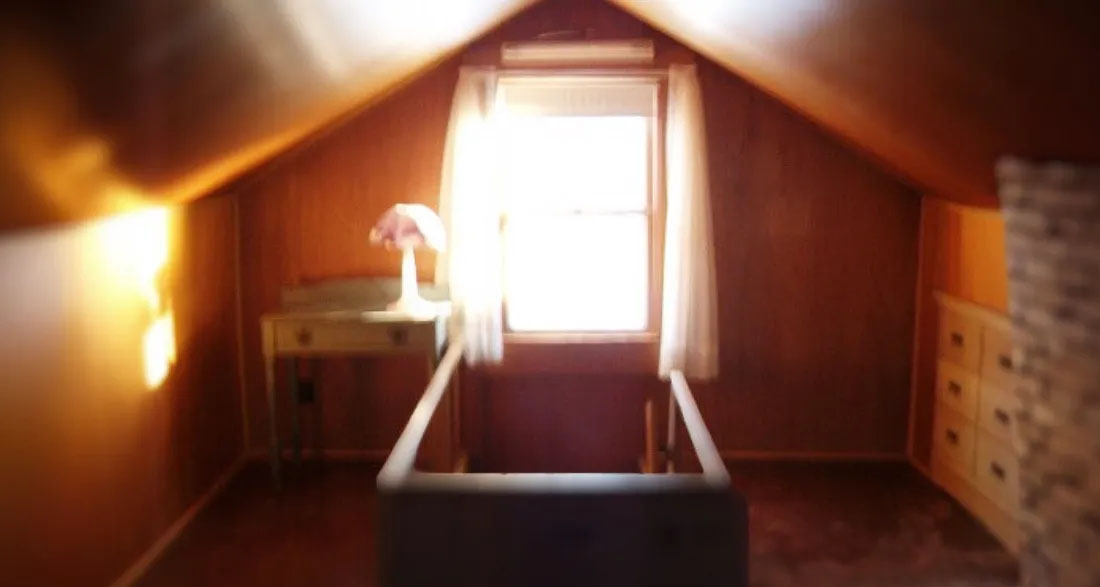
From the very first year we lived there, there was one place in that house I never stepped foot in—the attic.
At the top of the stairs was a heavy wooden door, always locked with a thick brass padlock. For 52 years, that door stayed shut. Every time I asked Martha about it, she brushed me off with the same calm answers.
“It’s just junk up there, Gerry,” she’d say.
“Old furniture from my parents’ house.”
“Nothing worth digging through, honey.”
“Just dusty boxes and moth-eaten clothes.”
I believed her. I never snooped through her things. We all deserve our privacy, right? Still, after half a century of passing that locked door, curiosity had started chewing at me like a mouse in the walls.
Two weeks ago, everything changed.
Martha was in the kitchen making her famous apple pie for our grandson’s birthday. I was in the living room watching the evening news when I heard a loud thud, followed by her scream.
“Gerry! Oh God, Gerry, help me!”
I ran in and found her crumpled on the kitchen floor, gripping her hip, her face pale and twisted in pain.
“I think it’s broken,” she whispered, tears sliding down her cheeks.
The ambulance arrived fast. They rushed her into surgery that same night. The doctors told me she’d fractured her hip in two places. At 75, that’s serious business.
“She’s lucky,” one doctor said gently. “But recovery will take time.”
Martha was sent to a care facility for rehab, and for the first time in decades, I came home to an empty house. No humming in the kitchen. No soft footsteps. Just silence.
That’s when I started hearing it.
Scratching sounds. Slow. Careful. Always coming from above me.
At first, I told myself it was squirrels again. We’d had them before. But this was different. Too steady. Too deliberate. Like someone dragging furniture across the floor.
The sound always came in the evening. Always from the same spot. Right above the kitchen. Right under the attic.
My Navy instincts kicked in. I couldn’t ignore it.
One night, I grabbed my old Navy flashlight and the spare keys Martha kept in the kitchen drawer. That keyring had everything—keys to the shed, the basement, old filing cabinets, even cars we sold years ago.
I climbed the stairs and stood in front of the attic door. I tried every single key.
None of them fit.
That stopped me cold. Martha kept every key. Except this one.
Frustrated and uneasy, I went to my toolbox and grabbed a screwdriver. It took effort, but I finally pried the padlock off.
The moment I opened the door, a heavy smell hit me—dust, old paper, and something metallic that made my stomach twist.
The attic looked normal at first. Boxes. Old furniture covered in sheets. Exactly like Martha had said.
But my flashlight kept pulling toward one corner.
There sat an old oak trunk, big and heavy, with brass corners turned green from age. Another padlock held it shut—bigger than the one on the door.
I stood there listening to my own heartbeat.
The next morning, I went to visit Martha. She was doing her physical therapy, smiling bravely through the pain.
I tried to sound casual.
“Honey,” I said, “I’ve been hearing scratching noises at night. Thought maybe we had animals in the attic. What’s in that old trunk up there?”
The color drained from her face instantly. Her hands started shaking so badly she dropped her glass of water. It shattered on the floor.
“You didn’t open it, did you?” she whispered. “Gerry… tell me you didn’t open that trunk.”
That fear wasn’t about junk.
That night, I couldn’t sleep. Around midnight, I went to the garage, grabbed my bolt cutters, and climbed the stairs again.
The lock snapped easily.
Inside the trunk were hundreds of letters, tied with faded ribbons, sorted by date. The oldest were from 1966—the year Martha and I got married. The newest were from the late 1970s.
They were all addressed to Martha.
All signed by the same name.
Daniel.
I opened one letter.
“My dearest Martha…”
It spoke of longing, of love, of counting days. Every single letter ended the same way:
“I’ll come for you and our son when the time is right. All my love, Daniel.”
Our son?
The letters talked about watching “little James” grow up. About pride. About love.
James. My firstborn. The boy I raised. The man I walked down the aisle.
The next day, I confronted Martha.
“You found them,” she whispered.
“Who is Daniel?” I demanded.
She sobbed and told me everything.
Daniel was her fiancé before me. Drafted to Vietnam. She got pregnant. Then his plane went down. Missing in action. Presumed dead.
She met me two months later.
“I thought he was gone forever,” she cried.
But he wasn’t dead.
He survived. Captured. Released years later. And he lived in our town—watching from a distance.
I found his address. Went there.
A neighbor told me, “Dan passed away three days ago.”
Three days ago.
Back home, Martha admitted he’d visited her weeks before her accident.
“He brought something for James,” she said.
In the attic, beneath the letters, I found a Purple Heart, a diary, and a photo of Daniel, Martha, and baby James.
When I gave it to James, he shook.
“Dad,” he said, “I’ve known since I was 16.”
Daniel had told him everything.
“He said you were the best father any kid could ask for,” James said. “And he was grateful.”
Last Sunday, James hugged me tight.
“You may not be my blood,” he said, “but you’re my father.”
At 76, I don’t know whether to feel betrayed or grateful.
All I know is this:
Families aren’t built on blood alone.
They’re built on love, sacrifice, and the truths we finally dare to face.