

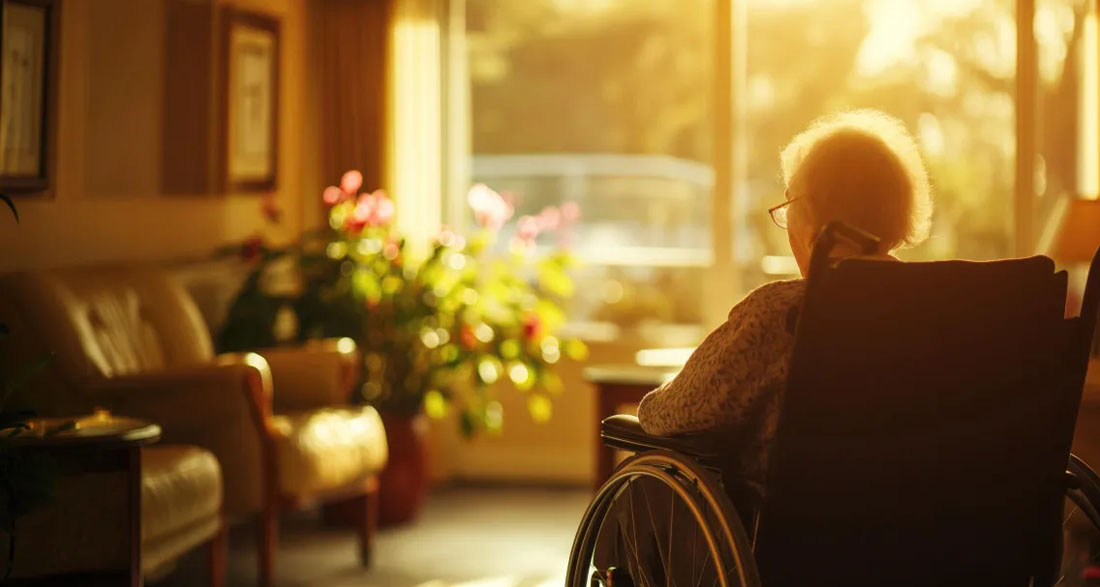
I thought hiring a young caregiver for my 82-year-old mom would finally let me breathe a little—maybe even enjoy the quiet life my husband and I had been dreaming about. But I was wrong. So very wrong.
It started with little things: a strange pattern on their Sunday walks, a subtle tension in my mother’s voice, and a few seconds of audio from our doorbell camera that made my stomach twist into knots. Something was going on between them, something nobody was telling me.
I’m 58, have been married to Mark for 33 years, raised three kids to adulthood, and yet somehow, my own life blindsided me like a plot twist straight out of a bad soap opera.
People think life calms down when the kids leave home. That’s a myth. The noise doesn’t disappear—it just changes. Instead of “Mom, where’s my backpack?” you get “Mom, have you thought about long-term care insurance? And your medical power of attorney?” Not quite as fun, but just as loud in its own way.
I teach high school English. My life revolves around coffee, teenagers’ drama, and essays where students insist that a crumpled wrapper represents “postmodern despair.” Mark is steady. Electrical engineer. The guy who can fix a dishwasher at 10 p.m. and still be up at 6 a.m. to pack his own lunch. We were heading into this “empty nest” phase with a kind of quiet relief.
And then there’s my mother.
Mom is 82. Her mind is razor-sharp; she can slice through your argument with a single comment. Her body… not so much. In January, she slipped in her kitchen and fractured her hip. Suddenly, the woman who mowed her own lawn without complaint was trapped in a recliner, counting pain pills like she was marking off days in prison.
My father had passed away suddenly at 73, from a stroke. One minute we were debating whether I graded too harshly, the next he was gone. He’d worked hard all his life and left Mom financially secure: farmland, stocks, the house they’d lived in for forty years. Everyone in town knew she was quietly wealthy—even if she still bought the cheapest cereal.
After Mom’s fall, the hospital social worker gently suggested hiring a caregiver. I couldn’t be there full time. Mark works. I work. My kids have their own lives. Mom didn’t need a nursing home, just someone to help with mobility, meds, cooking, and general safety.
So, I did the responsible daughter thing. I started interviewing caregivers.
Enter Alyssa.
Twenty-six. Calm smile. Soft voice. She showed up in light-blue scrubs, sneakers that looked ready for action, and a neat bun. She carried a binder under her arm. A binder.
We sat at the kitchen table, and she slid it toward me. “I printed a sample care plan based on your mom’s discharge notes,” she said. “We can adjust it together.”
Mom whispered to me later, “Oh, she’s organized. I like her.”
Alyssa asked thoughtful questions, listened to Mom’s opinions, and didn’t talk over her. She treated her like an adult, not a child. References were glowing. She lived fifteen minutes away and was studying for a nursing degree. She seemed perfect. Too perfect, maybe.
We hired her for weekdays and a short Sunday shift.
The first few weeks were bliss. She cooked real meals instead of Mom’s usual toast-and-cheese dinners. She made sure Mom took her meds, helped her through physical therapy exercises without making her feel weak, even dusted the tops of picture frames—which, I swear, hadn’t been dusted since the Clinton administration. Neighbors adored her. Mom loved her.
Every Sunday after lunch, Alyssa took Mom for a slow walk around the block. Fresh air, gossip about gardens and neighbors, small talk that made Mom’s eyes twinkle.
And then… things started to feel off.
At first, it was tiny. Mom returned from these walks looking tense, not exactly upset, but stiff, like she was holding something inside.
“How was the walk?” I’d ask.
“It was nice, honey,” she’d answer. Same words, same tone, every single week.
The first time, I believed her. By the fourth or fifth Sunday, my stomach began doing little backflips. My mother isn’t a broken record. Something was wrong.
Last Sunday, I knew it.
I was in the hallway when the front door opened. Alyssa’s hand hovered near Mom’s elbow, and Mom’s eyes were red and puffy—not from tiredness, from shock, from something else.
“That walk tired me out,” Mom murmured, heading straight for her room. Her hands shook on the walker.
Alyssa gave me a quick smile. “She did well,” she said. “We took it slow.”
“Mm,” I said, not trusting my own voice.
Weeks earlier, we’d installed a video doorbell. Motion-activated, picks up audio too. Mostly for my peace of mind: who’s coming, who’s going, when packages are dropped.
That night, after Mark went to bed, I sat at the dining table with a mug of tea and opened the app.
I scrolled to the Sunday afternoon clip and hit play.
Footsteps on gravel. Squeak of the gate. Figures appeared, warped by the lens. Then Mom’s voice, small, shaky:
“I can’t keep this from my daughter. She deserves to know what you told me.”
My heart stopped.
Alyssa’s voice, low and steady: “You’re not ready to tell her yet. She might… react badly. We should wait a little longer.”
“No. No more waiting. She deserves to know. She’s my daughter,” Mom whispered.
A sharp, slow exhale from Alyssa. “I’m telling you, this could change everything.”
“I don’t care,” Mom said. “I’m telling her soon.”
The clip ended. My teacher brain immediately started drafting essays of worst-case scenarios. Was Alyssa manipulating Mom? Was someone after money? Was Mom in danger?
I barely slept. Mark woke once, mumbled, “You okay?” I lied. “Yeah, just thinking about lesson plans.”
The next Sunday, I watched the clock. They returned on schedule. I pretended to dust in the living room.
Mom looked worn. Alyssa’s eyes flicked to mine like she was gauging my mood.
“Everything okay?” I asked, casual.
“Of course,” Alyssa said, smile too bright. “We sat on the bench for a bit and—”
“Actually,” I cut in, “why don’t you take the rest of the afternoon off? I’ll stay with Mom.”
She froze. “Oh… Are you sure? I was going to finish up her laundry—”
“I’ve got it,” I said. “Go rest. You’ve been amazing.”
Something flickered in her expression. Worry? Guilt? Fear?
“Okay,” she said slowly, grabbed her bag, and paused at the door. She glanced back toward Mom’s bedroom, like she wanted to say something and couldn’t.
“Bye, Margaret,” she called.
Mom’s door stayed shut.
I went straight to Mom. She sat in her armchair, hands twisted in her sweater. Her smile was fragile.
“Mom,” I said, quietly, “we need to talk.”
Tears filled her eyes instantly. “Oh, honey… I was hoping to do this better.”
“There is something,” I said. “I heard you and Alyssa on the doorbell recording. I know you’re keeping something from me.”
She pressed her lips together, holding back words.
“Are you okay?” I asked. “Is she hurting you? Asking for money? Something else?”
“No,” Mom said quickly. “Alyssa’s been nothing but good.”
“Then what is it?” I pressed. “What could ‘change everything’?”
She looked down, took a shaky breath. “It’s about your father.”
My chest dropped.
“Dad?” I said. “He’s been gone ten years. What about him?”
“He… wasn’t faithful. Once. A long time ago. Before you were born.”
I swallowed hard. “What do you mean?”
“He had an affair,” she whispered. “And she had a baby. A girl.”
Shock made me laugh. “You mean… I have a sister?”
Mom lifted her head. “Not somewhere out there. Here. Alyssa.”
I blinked. “Our caregiver… Alyssa?”
She nodded. “She told me during one of our walks. She didn’t want to come to you without proof. She knew you’d be… upset.”
“Proof?”
“She took a strand of your hair from your brush when you left it on the counter,” Mom admitted.
“You took my hair… for a DNA test?”
Mom winced. “She regretted it. But she wanted to be sure before making any claims.”
“And?” I asked.
“It confirmed you’re half-sisters. Twice. Two separate tests.”
Everything inside me flipped. My father, my childhood, this young woman moving in and out of Mom’s life for weeks.
“She grew up with her mother alone,” Mom said softly. “Your father gave them nothing. When her mother died, Alyssa sought answers. She found me. She wanted to see the life he chose over hers.”
“Does she want money?” I asked bluntly.
“She never asked. But I offered. Correcting a wrong.”
“And me?” I whispered.
“You still have your share. I’m not taking anything from you. Just… righting a piece of his mistake.”
“And from me?” I asked.
“She wants to know you,” Mom said. “She said you seem strong, kind… like the good parts of her mother.”
I laughed, partly from relief, partly from disbelief. “She broke my trust before meeting me. That’s a weird intro.”
“She was scared,” Mom said. “Fear makes people do foolish things.”
Silence.
“I don’t know what to do with this,” I finally admitted.
Mom squeezed my hand. “You don’t have to decide today. I just couldn’t lie anymore.”
I stared at family photos. Alyssa grew up with a different set. Same father at the center.
“Does Mark know?” I asked.
“Not yet,” Mom said. “You’re first.”
I exhaled, harshly. “Call her. Ask her to come tonight. I want to talk.”
Mom blinked. “Are you sure?”
“No,” I said. “Do it anyway.”
Alyssa came back in jeans and a sweater, hair down, looking younger, vulnerable. She sat, hands folded tight.
“I’m sorry,” she said. “For taking your hair, for not telling you, for… all of it.”
“Is it true?” I asked.
“Two tests,” she said. “Half-siblings. I can show you.”
“I’ll do one myself, with my consent. If it matches… then we talk next steps.”
She swallowed. “Fair. More than I expected.”
She told her story—her mother, Elena, meeting my dad. His broken promises. Growing up without him. “I didn’t come for money,” she said. “I came to see if I had someone who shared my history. Proof that I wasn’t unlovable.”
We did a new DNA test together. Two devices, same result. Half-sisters.
I told Mark. He was furious at Dad, cautious about Alyssa, protective of me, then softened as he watched her with Mom. Kids were thrown—“So we have a secret aunt?”—then warmed to her.
Mom’s house feels different now. Alyssa doesn’t just clock in; she joins dinners, helps with crosswords, listens to stories of the man who was my father to me, someone else to her.
Sometimes I hear her shyly say, “Okay, Mom Margaret, what’s another word for ‘unexpected family’?” And they laugh.
It’s messy. It hurts. Some days I want to slam the door on the whole thing. Other days I’m grateful the truth came while Mom’s still here.
Life cracked open in a way I never expected. But not every crack means falling apart. Sometimes… it’s a space for someone else to step through.