

At sixty, I finally decided it was my turn. For decades, I had lived for everyone else—my son, my work, my responsibilities—but somewhere along the way, I forgot who I was. So when I chose to marry again, I vowed that everything about that day would feel like me.
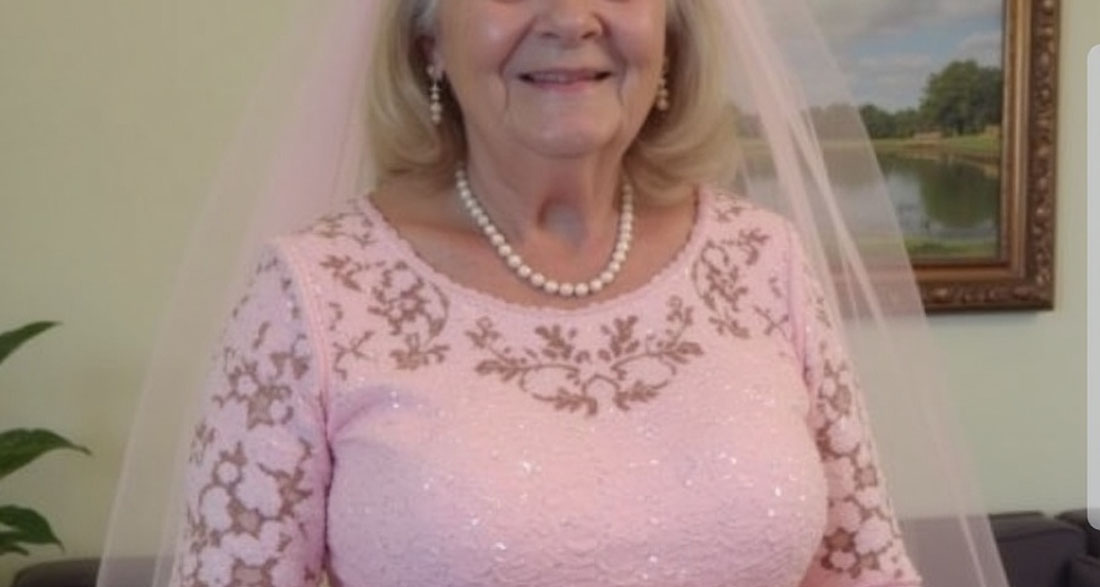
I designed my own wedding dress—a soft pink gown made of lace and satin, sewn by hand with careful, trembling stitches. It wasn’t perfect, but it was mine. More than a dress, it was a declaration. After a lifetime of fading into the background, I was ready to be seen.
But what was supposed to be the happiest day of my life nearly turned into humiliation when my daughter-in-law laughed at me in front of everyone.
My son, Lachlan, saved the moment. He grabbed the microphone and reminded the room who I truly was—and what I had survived.
But to understand that, you have to know where I came from. My story didn’t start with romance—it started with survival.
My husband left when Lachlan was only three years old. No argument, no warning, just the sound of a suitcase zipper and a man who couldn’t handle responsibility. I still remember his voice, flat and cruel:
“I don’t want to share you with a toddler.”
Then he was gone. I stood in our tiny kitchen, holding Lachlan in one arm and a stack of unpaid bills in the other. I didn’t cry. I didn’t have time.
From that night on, every day became a battle to just keep going. I worked as a receptionist during the day, waited tables at a diner at night, barely slept. Some nights, I came home past midnight, heated leftovers, and ate on the kitchen floor because the silence of the table alone felt too heavy. I whispered to myself, Just get through tomorrow. And I did.
We didn’t have much. Lachlan’s clothes came from church donations or kind neighbors. I patched holes, hemmed sleeves, made do. It was exhausting, but I found solace in the rhythm of sewing. The needle gliding through fabric became my private joy.
Sometimes I imagined myself in something pretty—pink, lace—but I would push the thought away. Indulgence wasn’t allowed.
My ex-husband had made sure of that, even from afar. His voice haunted me:
“No pink. No white. You’re not a bride anymore. Pink’s for silly little girls.”
So I wore beige, gray, brown. I blended into life until I wasn’t even sure I existed outside my duties. I became invisible, a quiet hum behind everyone else’s story.
But Lachlan grew into a man I could be proud of—kind, strong, respectful. He married a woman named Jocelyn, and I tried to welcome her with open arms. I told myself my job was done. My son had his life. Now I could rest—or at least pretend to.
Then, one hot summer afternoon, a runaway watermelon changed everything.
I was juggling grocery bags in the parking lot when a watermelon rolled out of my cart and nearly escaped down the hill.
“Before that melon makes a break for it!” a voice called.
I turned to see a man catching it mid-roll. He smiled at me, warm and amused. Kind eyes. Gentle humor.
“Thank you,” I said, laughing despite myself.
He introduced himself—Quentin. A widower, older but not worn down. We talked right there by the trunk for half an hour—about groceries, cooking, and the unbearable heat. I hadn’t laughed like that in years.
Coffee dates followed, then dinners. Quentin never treated me like I was “past my time.” He liked my simple clothes, my calloused hands, my realness. No games, no pretense. He listened. Really listened.
One night, over pot roast and red wine, he reached across the table, eyes steady.
“Will you marry me?”
No big show. Just us. Just sincerity.
I said yes.
When I began planning the wedding, I knew I didn’t want white or beige. I wanted pink. A soft, unapologetic pink that whispered, I’m still here. I bought the fabric on clearance—a blush satin with tiny floral lace. I carried it home like treasure.
That night, I spread it on my kitchen table and ran my fingers along the edge. My heart raced. Maybe I was breaking some long-forgotten rule.
For three weeks, I sewed. Every stitch was therapy. I hummed, smiled without realizing it. When it was done, I couldn’t stop staring. Imperfect seams, but alive. Me.
One afternoon, I showed Lachlan and Jocelyn. The dress caught sunlight like it had a life of its own. Jocelyn wrinkled her nose.
“Pink?” she said, laughing. “Seriously? At your age?”
“It makes me happy,” I said.
“You look like a kid playing dress-up. You’re a grandma, not a cupcake.”
Lachlan looked uncomfortable. I smiled tightly, swallowing the sting. Later that night, I touched the fabric again and whispered, “Don’t let her steal this.” Joy stitched into your soul isn’t undone easily.
Wedding day arrived. I barely recognized the woman in the mirror. Hair pinned, makeup soft. The dress hugged the parts I once hid. Gentle, warm, alive. A woman starting again.
The ceremony was simple. Friends, family, laughter. Flowers and cake filled the air. People smiled as I walked in. Some said I looked radiant, some loved the color. For the first time in years, I let myself believe them.
Then Jocelyn walked in.
“Oh my god,” she scoffed, loud enough for everyone to hear. “You actually wore it. You look like a cupcake at a kid’s party. Aren’t you embarrassed?”
Guests chuckled awkwardly. My face burned. Her words pierced through decades of quiet endurance.
Then Lachlan stood.
“Excuse me, everyone, can I say something?”
The room went silent.
“You see my mom in that pink dress?” he said. “That’s not just fabric. That’s her life. Every stitch made by the woman who worked two jobs to raise me. She never bought herself anything nice because she was too busy making sure I had what I needed.
For decades, she put herself last. And now she finally did something for herself. Every thread is her story. That pink? That’s her joy. That’s her courage.”
He looked at Jocelyn. “If you can’t respect that, maybe think about what kind of person laughs at someone else’s happiness. But I will always defend the woman who raised me.”
Then he raised his glass. “To my mom. To pink. To joy.”
Applause erupted. Glasses clinked. Guests shouted, “Well said!” My eyes blurred with tears. Jocelyn muttered something about “just joking,” but no one laughed with her.
After that, everything changed. People saw me—not just as a mother, not just as a guest. They saw a woman who had survived storms and chose to wear color anyway. Guests complimented the dress, asked if I took custom orders. Someone said, “You look like happiness itself.”
When Quentin took my hand for our first dance, he whispered, “You’re the most beautiful bride I’ve ever seen.” And for once, I didn’t argue. I believed him.
Jocelyn spent the evening scrolling on her phone, ignored by everyone. I didn’t feel bad. Years of letting people like her make me small were over.
The next morning, her text appeared: You made me look bad. Don’t expect an apology.
I stared at it, then deleted it. She didn’t need my help to look foolish.
Later, I sat by my sewing machine, sunlight spilling over leftover scraps of pink lace. For years, I believed being a good mother meant sacrificing everything. That joy was for other people. That once you reached a certain age, your story stopped being about you.
But in that hall, in that pink dress, surrounded by people who finally saw me, I learned I was wrong. Joy has no expiration date.
That dress wasn’t about youth or proving anything. It was about reclaiming color after a lifetime of gray. It was about saying, I’m still here. I still matter.
Now, when I see that dress hanging in my closet, I don’t see fabric. I see proof. Proof that it’s never too late to choose yourself. Proof that courage can look like satin and lace. Proof that pink belongs to anyone brave enough to wear it.
And maybe that’s why I smile when I see someone hesitating—too afraid to stand out, too afraid to be seen. I know that fear. I lived in it for decades.
But pink looks too good on me to hide anymore.