

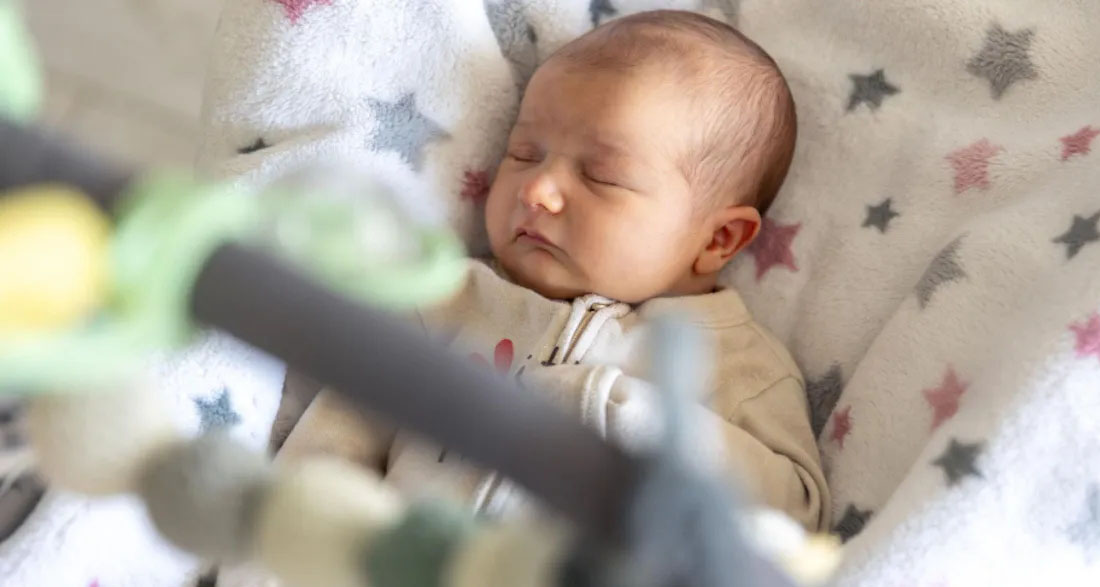
I volunteered to be a surrogate for my best friend, Rachel, and carried her baby for nine long months. Every kick, every hiccup, every sleepless night felt like a secret I shared with someone I loved. I never imagined what would happen the moment he was born.
She looked at her son—my son for nine months—and whispered words that froze me in place:
“I can’t take him.”
I became numb. I had carried life inside me. I had given her a child. And she handed me a truth I wasn’t prepared to hear.
It started months before, when Rachel confessed she couldn’t carry a pregnancy to term. I didn’t hesitate. I said it first, before thinking twice:
“Let me do it. Let me carry your baby.”
Carrying another person’s child in my womb for the third time felt like holding a fragile, impossible wonder. Rachel came to every ultrasound, gripping my hand so tight it left marks, and called the baby “our miracle,” even before we had chosen a name.
I reminded myself often, quietly, in the bathroom mirror during the worst days:
“Let me carry your baby.”
Most of the pregnancy was hell on my stomach. I threw up constantly. My mother and my two children, Mia and Caleb, kept me alive in the practical ways: holding my hair back, keeping the house running, keeping me from losing my mind while I worked.
Labor lasted twenty-one hours. Every second was a negotiation with pain so deep, so raw, that I found myself bargaining with things I didn’t even believe in.
By the time they placed him in the nurse’s arms and he cried for the first time, furious and loud and alive, I had nothing left. No words. No tears. Just the hollow, wrung-out relief of a body that had finally done the largest thing it could ever do.
Rachel was beside me the entire time. She gripped my hand so tightly around hour fourteen that my fingers had gone numb.
The nurse cleaned the baby and wrapped him in a white blanket. Rachel stepped forward, trembling, her eyes already wet. She reached for him… and stopped.
The nurse had shifted the blanket to check his legs, and there it was: a dark, jagged birthmark running along his upper thigh, roughly the shape of a thumb pressed into the skin.
Rachel’s face went pale. Too pale. Too fast. It scared me.
“No,” she whispered.
The nurse smiled gently. “It’s just a birthmark. Very common.”
But Rachel stepped back. Her hand covered her mouth.
“I can’t take him.”
The room fell silent. Marcus, her husband, looked at her, first confused, then… afraid.
“Rachel, what are you doing?” he asked.
“It’s just a birthmark,” the nurse repeated, calm.
Rachel didn’t answer. She pointed at the mark and whispered words I had never heard from her in fifteen years:
“That’s not possible. I’ve seen that exact mark before… years ago, when Daniel used to jog with you in the summers, both of you in shorts.”
I didn’t understand. Marcus did.
I was shaking. My body was raw, the blanket around my shoulders useless. I watched my best friend collapse in front of me without knowing why.
Marcus had turned the color of old concrete. Confusion had shifted into terror.
Rachel grabbed her phone and dialed.
“Get your wife on the line,” she said. “She deserves to see this.”
Almost thirty minutes later, a young couple burst through the ward door.
Rachel confronted them instantly:
“How could you? That’s your baby, Daniel. Only you have that mark on your thigh!”
Daniel opened his mouth. Nothing came out.
Marcus spoke first, words wedged and sharp:
“I had a vasectomy,” he admitted. “Before we ever talked about children.
When you mentioned IVF, I panicked. I didn’t tell you. I used my brother Daniel’s sample instead of my own. I thought it wouldn’t matter. It was still your egg.”
The silence after that was louder than anything I’d ever heard.
Rachel let out a sound neither laugh nor sob. “You let me believe this baby was ours,” she snapped. “For nine months, you let me believe…”
“I thought it wouldn’t matter,” Marcus repeated weakly.
Daniel interjected, voice cracking: “I donated. He said you agreed. He said it was a family decision.”
Claire, Daniel’s wife, stared at him like he had become a stranger. “You donated your sperm?”
“He said she knew,” Daniel repeated, less certain now.
Rachel shook her head. “I can’t raise a baby who is the shape of a lie. Every time I look at him, I’ll see exactly what you did.”
She walked out. I called her name twice. The door swung shut.
“I can’t raise a baby who is the shape of a lie.”
I turned to Marcus. “You let me carry this baby for nine months without telling any of us the truth?”
“I’ll fix it,” he whispered. “I’ll sort everything out.”
Then he left. Daniel and Claire followed, arguing quietly down the hall.
I was left alone in a hospital bed with a newborn who hadn’t been claimed and a question I couldn’t shake: If they don’t take him, who will?
I was discharged three days later. My mother was already living with us, helping with Mia and Caleb while I worked. She stood in the doorway that afternoon, holding them both, looking at Justin with that particular expression she reserves for when she’s quietly right.
“You were barely keeping your head above water,” she muttered. “And now this.”
“I carried him for nine months, Mom,” I said. “He’s not disposable because adults made a mess.”
She didn’t argue. She stayed. She got up at 3 a.m. feeds when I could barely move, silently loving him in the way she knew best.
Rachel didn’t call. Marcus sent boxes: diapers, formula, new clothes. Guilt dressed as logistics.
One night, rocking Justin at 2 a.m., I whispered his name aloud: “Justin.”
It was the name Rachel had chosen at the 20-week ultrasound, pressed into my memory forever. He fit it perfectly, this small, serious, warm-breathed soul who had no idea what storm he had been born into.
Mia and Caleb started calling him “baby brother” after three days. I stopped trying to correct them.
Weeks passed. Rachel went back to work. I stayed busy. One afternoon, running errands with Justin strapped to my chest, I saw her in the supermarket, staring at formula tins like they were a riddle she couldn’t solve.
I didn’t call her name. I just walked past, adjusting Justin. He made the small burrowing sound he always made when content.
A stranger smiled. “He’s beautiful,” she said.
“Thank you,” I replied.
Rachel looked up. She saw Justin’s face first, then how he nestled against me, fully at ease. Her eyes filled, but she turned away and walked to the other end of the aisle. Silent.
Two weeks later, I decided waiting wasn’t enough. Justin deserved a name said aloud, in front of people who loved him. I texted Rachel:
“We’re officially naming him Justin on Saturday. Thought you should know. You don’t have to come.”
No reply.
I gathered a small group at my house: my mother, a couple of close friends, our helpful neighbor. Nothing fancy, just those who had been there.
Marcus arrived. Daniel and Claire arrived, fragile after days of quiet arguments. Rachel wasn’t coming—so I was told.
I picked Justin up from the bassinet. He gripped my finger, like he always did, and it never failed to make me smile.
Then the doorbell rang.
Everyone froze.
Rachel stood on the porch. Thinner. Tired in a way sleep couldn’t fix. But upright, breathing, present.
“I wasn’t ready before,” she said. “I’m not sure I am now. But I’m here.”
I stepped back and let her in. She moved slowly, people instinctively making space for her. Marcus stayed across the room, not meeting her eyes. She looked only at Justin.
She took him carefully, hesitantly. The second he was in her arms, he stilled. She pressed her face into his hair and whispered:
“He knows my voice. I talked to him every week. He knows me.”
“He does,” I said softly.
She cried like I had never seen her cry, since her first miscarriage years ago, right in her kitchen. The betrayal lingered. The anger remained. But something new had arrived: understanding. This baby wasn’t a lie. He was just a child. And he already knew her.
“I named him Justin,” I whispered. “Like you said at the ultrasound.”
She nodded, tears soaking her cheeks. “It fits.”
Three days later, I brought Mia, Caleb, and a stuffed bear Caleb insisted Justin needed. Rachel opened the door holding him. The ease between them melted a little of the tension in my chest.
“Come in,” she said softly.
Mia and Caleb ran straight to the living room. Rachel and I stayed in the doorway, Justin between us. Gratitude, apology, and love mingled in a complicated, unspoken way.
“Thank you,” Rachel whispered. “For not giving up on him. Or on me.”
“You showed up,” I said. “That’s the part that mattered.”
Counseling followed for both couples. Nothing was perfect. But Justin was in his mother’s arms. Mia and Caleb were raiding the fridge. And Rachel looked at this tiny human the way she had at every ultrasound—like he was always meant to be.
Secrets nearly destroyed three families. But one baby stitched them back together, one tiny fist at a time.