

Sometimes the past stays quiet—until it doesn’t. For decades, I thought I had closed that chapter of my life, tucked it away neatly like a forgotten old book on a shelf.
But then, one chilly December afternoon, an old envelope slipped out from a dusty attic shelf and landed at my feet, and just like that, the past came roaring back.
I wasn’t looking for her. Not really. But somehow, every December, when the house dimmed by 5 p.m. and the old string lights blinked faintly in the windows just like they used to when the kids were little, Sue would find her way back into my thoughts.
It was never deliberate. She floated in quietly, like the scent of pine, impossible to ignore. Thirty-eight years later, and still, she haunted the corners of Christmas.
My name is Mark. I’m 59 now. And when I was in my 20s, I lost the woman I thought I’d grow old with.
Not because love ran dry, or because we had some dramatic falling-out. No. Life just got loud, complicated, and messy—far faster than either of us could have imagined when we were those wide-eyed college kids making promises under the bleachers.
Sue—or Susan, as the world formally knew her—was different. She had this quiet, steel-strong way about her that made people trust her instantly. She could sit in a crowded room, and somehow, she’d make you feel like you were the only one there.
We met during our sophomore year. She dropped a pen. I picked it up. That was the beginning.
We became inseparable, the kind of couple people rolled their eyes at but secretly envied. Because we weren’t obnoxious about it. We were just… right.
Then graduation came. I got a call one rainy afternoon that my dad had taken a fall. He’d been declining, and Mom wasn’t able to handle everything alone. I packed my bags and moved back home.
Sue had just landed her dream job at a nonprofit, the kind of opportunity she had always wanted—one that gave her purpose, challenge, and room to grow. There was no way I could ask her to give that up. We told ourselves it would just be temporary.
We survived on weekend drives, letters that took days to arrive, and late-night phone calls. We believed love would be enough.
And then… she disappeared.
Not an argument. Not a goodbye. Just silence. One week, she was writing me long, inky letters filled with love and hope, and the next, nothing. I wrote again anyway.
This one was different. In it, I told her I loved her, that I could wait. That none of it changed how I felt. That was the last letter I ever sent. I even called her parents’ house, nervously asking if they’d pass it along.
Her father was polite but distant. “I’ll make sure she gets it,” he said. I believed him. I wanted to believe him.
Weeks turned into months. And with no reply, I started telling myself she’d made her choice. Maybe someone else had come along. Maybe she outgrew me. Eventually, I did what most people do when life doesn’t provide closure: I moved forward.
I met Heather. She was different from Sue in every way. Practical. Solid. Someone who didn’t romanticize life. And honestly, I needed that. We dated for a few years, then married. We built a quiet life together: two kids, a dog, a mortgage, PTA meetings, camping trips—the whole script. It wasn’t bad, just… different.
I moved forward.
Sadly, at 42, Heather and I divorced. Not because of chaos or cheating.
We simply realized we’d become housemates rather than lovers. We split everything down the middle, hugged in the lawyer’s office, and parted as friends. Our kids, Jonah and Claire, were old enough to understand. Thankfully, they turned out okay.
And yet… Sue never really left me. Every Christmas, I thought of her. I wondered if she was happy. If she remembered the promises we made as kids who didn’t know time yet. If she had ever truly let me go. Some nights, I’d lie in bed, staring at the ceiling, and hear her laugh echo in my mind.
Then, last year, something changed.
I was in the attic, hunting for decorations that always seemed to vanish every December.
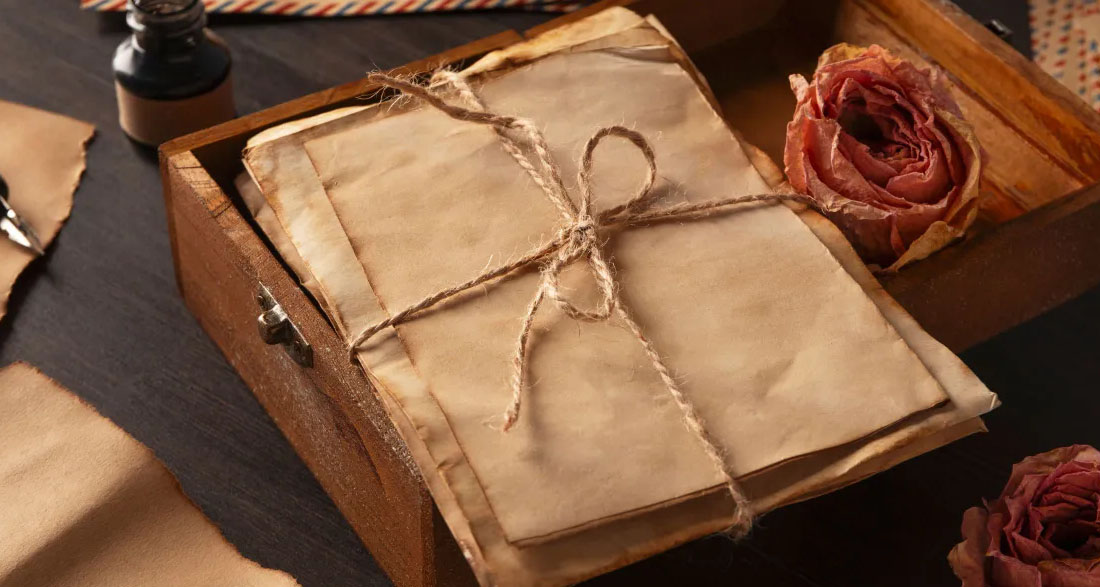
The air was cold and biting, even indoors. I reached for an old yearbook on the top shelf when a slim, faded envelope slid out and landed on my boot. Yellowed and worn, corners frayed, with my full name scrawled across it in that unmistakable, slanted handwriting.
Her handwriting.
I swear I stopped breathing.
I sank to the floor, surrounded by fake wreaths and broken ornaments, and opened it with trembling hands. Dated December 1991. The first few lines broke me. I had never seen this letter before—not ever.
The envelope had been opened and resealed. A knot formed in my chest. There was only one explanation.
Heather.
I didn’t know exactly when she’d found it, or why she hadn’t told me. Maybe she saw it during one of her cleaning purges. Maybe she thought she was protecting our marriage. Or maybe she just didn’t know how to explain that she had kept it all these years.
It didn’t matter now.
I read on. Sue explained that she had only just discovered my last letter. Her parents had hidden it with old documents, and she hadn’t known I’d even tried to reach out. They told her I’d called and said to let her go—that I didn’t want to be found.
I felt sick.
She wrote about Thomas, a family friend they’d been pushing her to marry. “Stable. Reliable,” they said. Just what her father liked. She didn’t say if she loved him, only that she was tired, confused, hurt that I hadn’t come after her.
Then came the sentence that burned itself into my memory:
“If you don’t answer this, I’ll assume you chose the life you wanted—and I’ll stop waiting.”
Her return address was at the bottom.
I sat there, stunned, feeling like I was 20 again, heart broken—but this time with the truth in my hands.
I climbed down and sat on the bed. Pulled out my laptop. Opened a browser. For a long time, I just sat there. Then I typed her name into the search bar.
“Oh my God,” I whispered.
There she was. A Facebook profile. A different last name, gray streaks in her hair, but still her. That gentle smile, the tilt of her head, the same eyes. My heart raced. She stood on a mountain trail, a man by her side—not romantic, just standing there. I didn’t care. She was real, alive, and just a click away.
I typed a message. Deleted it. Typed another. Deleted it. Everything sounded forced, too much, too late. Then, on impulse, I clicked “Add Friend.”
Five minutes later—accepted. My heart lurched. Then the message:
“Hi! Long time no see! What made you suddenly decide to add me after all these years?”
I couldn’t type. My hands shook. I sent a voice message instead:
“Hi, Sue. It’s… really me. Mark. I found your letter—the one from 1991. I never got it back then. I’m so sorry. I didn’t know. I’ve thought about you every Christmas since. I never stopped wondering what happened. I swear I tried. I wrote. I called your parents. I didn’t know they had lied to you. I didn’t know you thought I walked away.”
I sent another:
“I never meant to disappear. I was waiting for you too. I would have waited forever if I’d known you were still out there. I just thought… you’d moved on.”
She didn’t reply that night. I barely slept. The next morning, a message:
“We need to meet.”
That was all she said. All I needed.
I called my kids. Jonah laughed, “Dad, that’s literally the most romantic thing I’ve ever heard. You have to go.”
Claire added, “Just be careful, okay? People change.”
“Yeah,” I said. “But maybe we changed in ways that finally line up.”
I drove four hours that Saturday, heart hammering. The café was small, tucked on a quiet street. I arrived ten minutes early. Five minutes later, she walked in.
There she was. Navy peacoat, hair pulled back, smiling like no time had passed.
“Hi,” I said.
“Hi, Mark,” she replied. Same voice, same warmth.
We hugged. Awkward at first, then tighter—our bodies remembering what our minds hadn’t yet caught up to. We ordered coffee—mine black, hers with cream and a hint of cinnamon, just like I remembered.
“I don’t even know where to start,” I admitted.
Sue smiled. “The letter, maybe.”
I explained about Heather and the yearbook. Sue nodded. “I believe you. My parents told me you wanted me to move on. They wrecked me.”
“They were trying to steer my life,” she said. “They always liked Thomas. Said he had a future. You… they thought you were too much of a dreamer.”
She had a daughter now—Emily, 25. Thomas and she divorced after 12 years. Sue remarried briefly, divorced again. I told her about Jonah, Claire, Heather.
Christmas was always hard, she whispered. Me too.
I finally asked, nervously, “Sue… would you ever consider giving us another shot? Even now. Even at this age. Maybe especially now—because now we know what we want.”
She stared a moment. Then, smiling softly, “I thought you’d never ask.”
And that’s how it started again.
This past year has been like stepping back into a life I thought I lost—but with fresh eyes. Wiser ones. Every Saturday, we hike together, coffee in thermoses, walking side by side. We talk about everything: lost years, our children, scars, hopes.
Sometimes she looks at me and says, “Can you believe we found each other again?”
I smile and reply, “I never stopped believing.”
This spring, we’re getting married. Small ceremony. Family and close friends. She’ll wear blue. I’ll be in gray.
Because sometimes life doesn’t forget what it’s meant to finish. It just waits until we’re ready.
I’ll be in gray.