

For four months, I had trusted Helen—the sweet, gentle woman who cleaned my house, carried baskets of laundry with a warm smile, and hugged my children like she had known them forever.
I believed she was simply our housekeeper, a kind helper we had found through an agency. I couldn’t have been more wrong.
It all came crashing down one ordinary afternoon. I was walking past the bathroom when my eyes caught something under that tiny bandage she always wore on her wrist. A sharp black point glinted under the adhesive.
In that moment, everything I thought I knew about Helen shattered. She hadn’t come into our lives by accident. She had come with a secret.
I’m 38, a mother to three small children who are the center of my universe.
Going back to work full-time had been harder than I imagined. The laundry piled up faster than I could fold it, meals got skipped or rushed, and the emotional needs of three tiny humans often slipped through my fingers.
One day, I apologized to my boss for sneaking out ten minutes early. The next day, I promised my kids I’d make up for getting home twenty minutes late.
“I’m doing this for you guys,” I whispered to them as they played with blocks or peeked into my phone screen. “It’s for your future. For stability.”
But deep down, I knew something had to give. I could barely keep up with the laundry.
When the house finally fell silent at night, the guilt would hit me like a wave. I’d sit on the edge of my youngest daughter’s bed, watching her chest rise and fall with sleep, and feel a heavy weight in my chest.
Would she grow up remembering me only as a blur of tired eyes and a phone pressed to my ear?
The thought was unbearable, especially given my own childhood.
I was adopted. My memories of my biological mother are foggy, like looking through misted glass. I can’t recall her scent or picture her face clearly. But one thing stayed with me: a small picture of a blue bird.
I traced it with my finger, feeling the vertical bumps under the paint, while a woman—my mother, I assumed—told me, “It shows my love for you—a love that will last forever.”
Except it didn’t. She disappeared. I never truly knew why. My adoptive parents whispered about a voluntary surrender, but I never got the full story. Part of me didn’t want to know.
When I had my children, I promised myself I would never let them feel that emptiness. I wanted to be present, to be everything I had missed. But I was failing.
That’s why my husband and I contacted a cleaning agency. We needed someone to pick up the pieces I couldn’t manage, someone to catch the things I was dropping.
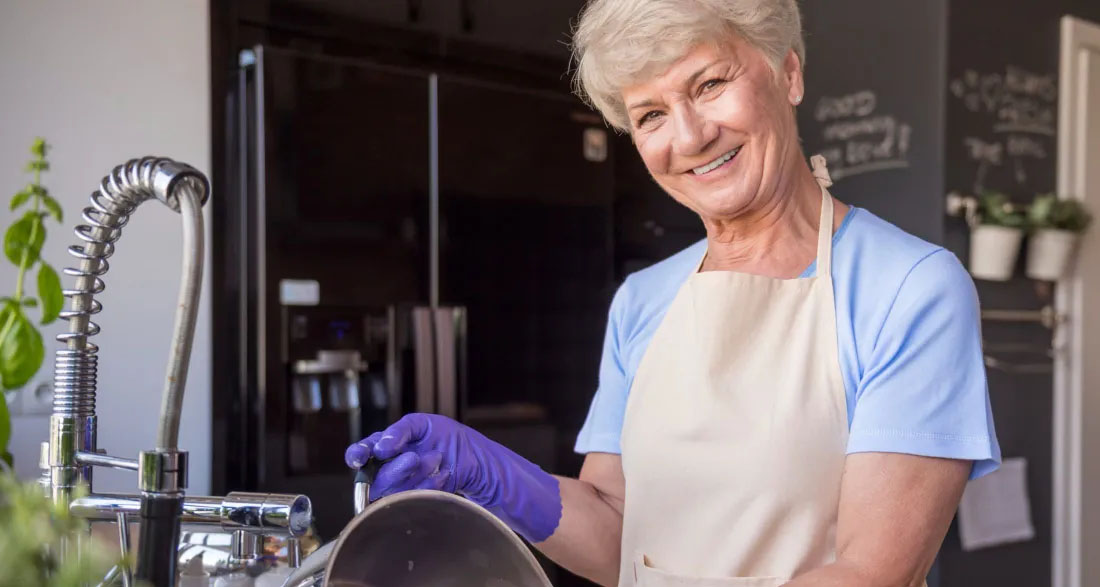
The agency sent Helen. She was 58, her soft gray curls framed a warm, lined face, and her eyes crinkled whenever she smiled at the kids. On her first day, she walked through the door carrying a tin of lemon cookies.
“Just to make a good first impression, dear,” she said, setting the cookies on the counter.
Helen quickly became part of our lives. Within a week, she knew exactly how my middle son liked his sandwiches cut and how to get my youngest to nap without fuss.
Sometimes, we’d sit in the kitchen with steaming mugs of coffee, and she’d tell stories of her childhood in a small town, where families always ate dinner together. She felt like the grandmotherly figure we were missing.
But there was something I couldn’t ignore. Helen always wore a small, flesh-colored bandage above her wrist. Every single day. It was tiny, hardly noticeable, but it was always there.
One morning, as she dried a plate, I finally asked, “Helen, is your arm okay? Do you need ointment or a better wrap for that?”
She shifted her arm, covering it instinctively. “Oh, it’s nothing serious, dear. Just an old wound. The skin hasn’t quite healed yet.”
I didn’t push. People have quirks, I told myself. A scar she was embarrassed about seemed reasonable.
Four months went by. Helen became a fixture in our home. She scrubbed floors, washed dishes, and the bandage never came off.
Then came the day everything changed.
The kids were running through the hallway, screaming and laughing during a game of hide-and-seek.
My oldest son rounded the corner at full speed. At the same time, Helen was coming up from the basement with a heavy laundry basket. They collided. Towels flew everywhere, and the basket scraped her bandage, peeling it back.
I rushed forward. For a split second, I saw a sharp black point under the adhesive. Not a scar, not a bruise. Ink.
Helen’s face went rigid, the warmth I was used to evaporating instantly. “Watch where you’re going!” she snapped, slapping her other hand over the bandage.
The hallway went dead quiet. My kids stared at her with wide, confused eyes.
“I-I’m sorry, Miss Helen,” my son stammered, looking like he might cry.
Helen bolted to the bathroom, clicking the lock behind her. I tried to brush off the unease—everyone has secrets, right? But something inside me didn’t let go.
A few days later, my afternoon meeting was canceled. I headed home early, hoping to surprise the kids with ice cream. The house was unusually still.
Passing the guest bathroom, I noticed the door cracked open. Helen was inside, probably cleaning, but then I saw her wrist.
The bandage was off.
The black point flashed in my memory. I froze. And then I saw it clearly. It wasn’t a wound. It wasn’t a scar. It was a tattoo—the same small blue bird I had traced as a child.
“Could this really be true?” I whispered, pressing my palm to my mouth to keep from screaming. The bumps I remembered—the veins and tendons of my mother’s wrist—were exactly the same.
Helen wasn’t just a housekeeper. She was my mother.
I must have shifted, because the floorboard groaned. Helen looked up, our eyes meeting in the mirror first, then her turning to face me.
“You…” I pointed at her wrist. “What is that?”
Her face drained of color.
“My mother had that tattoo,” I whispered. “She said it symbolized a love that never ends.”
Helen raised her hands, trembling. “Please… I can explain.”
Just then, I heard the front door downstairs.
“Hello? I’m home!” my husband called.
“Upstairs!” I yelled.
He climbed the stairs, stopping on the landing, eyes darting between Helen and me.
“What’s going on?” he asked.
“Say it,” I said, voice firm. “Say who you really are.”
A single tear ran down Helen’s cheek. “I’m your mother.”
My husband’s jaw dropped. “What? Helen?”
She nodded. “It’s true.”
“You lied to us? You came into our home under false pretenses?” my husband asked.
“You left me,” I said, shaking. “You said you’d love me forever, then you just… disappeared.”
“I was so young,” she whispered, reaching for me. I stepped back. “I was scared. I made mistakes I can never undo. I’ve lived with them every day of my life.”
“And so you applied to clean my house?” I asked, voice rising. “You held my children, tucked them into bed, all the while knowing who I was?”
“I wanted to be near you and my grandchildren,” she said. “I was afraid if I came to you openly, you’d shut the door in my face.”
“You don’t get to disappear for decades and then pretend to be a housekeeper,” I said.
“I thought… if I proved myself, I could earn a place back in the family,” she whispered.
“My husband’s calling the agency,” I said. “They need to know who they sent here.”
“But I just—”
“You’re fired, Helen,” I interrupted.
“Please… let me explain,” she begged.
“If you want contact,” I said, turning to the stairs, “it will be on my terms. Therapy. Honesty. No more secrets.”
“Yes… anything,” she whispered.
“And you don’t come near my children until I say so. Clear?”
“Understood,” she said, tears streaming.
I opened the door. Helen stepped onto the porch, pausing. “I do love you,” she said softly.
“Love isn’t something you hide under a bandage,” I replied.
She walked to her car. I closed and locked the door behind her, leaning against it and breathing slowly. My husband’s hand rested on my shoulder.
“You okay?” he asked.
I could hear the kids in the backyard, laughing. They had no idea the world had just shifted.
“Yeah… shaken up, but okay,” I said. The fog of my past—the emptiness I had felt for decades—was finally gone. I had built a life, a home, a family. I wasn’t missing anything anymore.