

When I won two hundred million dollars, I didn’t tell a soul. Not Daniel, my eldest son. Not Laura, my daughter. Not even my friends from church, who had always seemed so close.
I sat in my living room, the ticket shaking slightly in my hand, my heart pounding—not with joy, but with a hollow, strange emptiness.
For years, I had been invisible to the people I loved most. Always giving, always caring, always there—but somehow unseen. And now, suddenly, I held the power to see who really cared and who only cared when there was something to gain.
I decided to test them.
It wasn’t about revenge. I wanted truth. I wanted to see, deep down, if love still existed in my family, or if it had quietly died while I wasn’t paying attention.
Three days passed after claiming the prize. I let the first rush of excitement fade. I breathed slowly, trying to calm my racing thoughts. Then, finally, I picked up my phone, hands trembling, and dialed Daniel.
He was always the organized one, the responsible one—or at least that’s how he appeared. A successful man, busy, distant. Always seeming in control.
“Daniel,” I said softly, trying to make my voice fragile. “I… I need money for my medication. I can’t afford it this month.”
There was silence. Heavy, thick silence. Then the line clicked. I thought maybe the call had dropped, so I dialed again. But the phone didn’t even ring. He had blocked me.
I sat at the kitchen table, my hands still on the phone, staring at nothing. The kitchen clock ticked too loudly, each second hammering at my chest. Something inside me crumbled. I wasn’t even worth a conversation.
After a long, painful pause, I called Laura. My daughter. Emotional, quick-witted, sharp. I told her the same thing: that I needed money for medication.
She let out a long, annoyed sigh. “Mom, figure it out yourself. I have enough problems.”
And then—click. She hung up.
That was it. No questions. No concern. Not even a “What’s wrong?” After everything I had done for them—raising them alone after their father died, helping them through every crisis, watching their children so they could rest—this was all I got. A block and a dismissal.
I put the phone down and cried. Not the loud kind of crying that makes you gasp and scream. No, this was quiet, deep-down crying—the kind that waits years to escape. That night, my house felt colder. The walls seemed to lean in, listening.
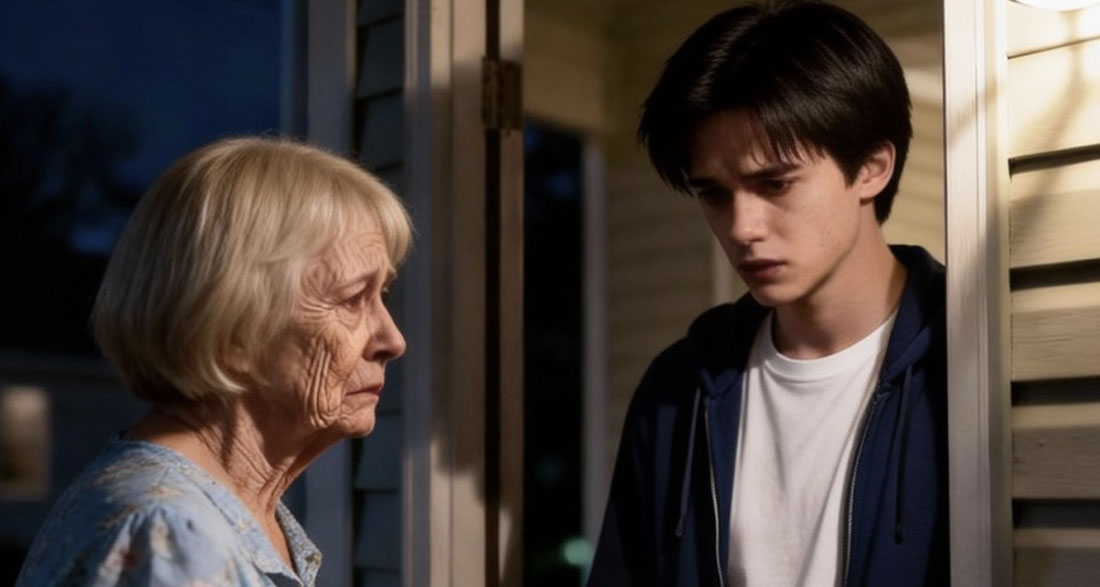
Hours later, close to midnight, I heard a car outside. At first, I thought it was just someone turning around. Then, there was a soft knock—three hesitant taps at the door.
I opened it and froze.
“Grandma?”
It was Ethan, my eighteen-year-old grandson. His eyes were red, his clothes wrinkled, and he looked exhausted. He held an envelope in his hand.
“I drove here,” he said quietly, almost whispering. “Four hundred miles. I brought what I could.” He handed me the envelope. Inside were five hundred dollars—his last savings, I would later learn.
“I… I don’t have any more,” he added. “But I couldn’t let you be alone.”
My throat closed. I tried to speak, but nothing came out. I pulled him into a hug, holding him tight. He smelled like gasoline and cold air. My heart broke and healed all at once.
That night, while he ate the soup I made, he told me how he’d borrowed a friend’s old car and left without thinking twice. He didn’t ask why, or how much I needed. He just came.
I didn’t sleep that night. I sat in my chair, staring at the dawn through the window, thinking about everything. About Daniel and Laura, about the years I had poured into everyone else and ignored myself. About the coldness on the phone. About Ethan, who had so little, yet gave me everything.
By sunrise, I knew exactly what I had to do.
A few days later, I called everyone and invited them over for a “family meeting.” I told them it was important. They came quickly—curiosity always beats guilt.
Daniel arrived first, nervous, his smile forced. Laura came next, her grin stiff, as if she were wearing it like armor. They didn’t know Ethan was already there, sitting beside me quietly.
Once we were all seated, I took a deep breath.
“I won the lottery,” I said.
The words hung in the room. Daniel’s eyes widened. Laura gasped and then laughed awkwardly. The silence that followed was thick, almost electric.
“You what?” Daniel finally said, his voice tight.
“Two hundred million dollars,” I replied calmly. “And I haven’t told anyone. Until now.”
Shock, greed, and fake delight flickered across their faces. They spoke at once.
“Mom, that’s amazing! Why didn’t you tell us?”
“We should celebrate!”
“You have to be careful. Let me handle the finances.”
I listened quietly. Then I told them the truth. About the phone calls. About the test. About Daniel blocking me and Laura hanging up. Their faces turned pale.
“Mom,” Daniel stammered, “that was unfair. I thought… I thought you were exaggerating.”
“Yeah,” Laura added quickly. “I didn’t realize you really needed help. I’ve been so busy—”
I raised my hand. “Stop,” I said softly. “I’m not angry. I just needed to know. And now I do.”
Silence fell. Ethan sat quietly beside me, looking down, embarrassed for them.
“I’m not telling you this to shame you,” I said. “I just wanted to see who would be there for me when I had nothing. And Ethan was.”
Daniel frowned. “You’re not saying—”
“I am,” I interrupted. “Ethan came with his last five hundred dollars. He didn’t ask why. He just came. That’s love. That’s family.”
Laura stood abruptly. “So what? You’re punishing us?”
“No,” I said, calm but firm. “I’m rewarding honesty and heart.”
I explained how I would divide my money. Ethan would have enough to study debt-free, buy a home one day, and build his future. The rest would go to a charitable foundation in my name, helping elderly people who had no one. Daniel and Laura would get a small portion—but only if they showed real care, not greed.
Daniel’s jaw clenched. Laura’s eyes filled with tears, and then she stormed out. The slam of the door echoed like a gunshot.
Daniel stayed longer, trying to reason with me, promising he would change. But my decision was final. For the first time in my life, I felt unshakable.
Ethan hugged me and whispered, “You did the right thing, Grandma.” I wanted to believe him, though doubt lingered.
That night, I sat in silence again. The lottery hadn’t just given me money—it had revealed truths. Money doesn’t create character; it amplifies it. It shows who people really are when masks fall away.
Months passed. Ethan started college without worry. He called often, not because he had to, but because he wanted to. He sent me photos of friends, updates about classes, dreams for the future. Every call from him brought me joy.
Daniel stayed distant, polite only on birthdays and holidays. Laura barely spoke, once sending a brief text: “Hope you’re well.” I replied, but she never responded.
Sometimes, loneliness crept in. Even with all that money, the house felt empty. But it was honest loneliness, not the suffocating kind that comes from being surrounded by fake love.
One afternoon, I sat on my porch watching the sunset. Ethan called, his voice bright. “Grandma! Guess what? I got a scholarship! I didn’t need it, but I wanted to try anyway.”
I laughed, heart swelling. “I’m proud of you, sweetheart.”
Then he said something that made tears run down my cheeks. “I didn’t help you that night because I wanted anything in return. I just couldn’t stand the thought of you being alone.”
That night, I cried again—but this time from relief, from hope.
Over the next seasons, I planted flowers, donated to causes that mattered, wrote letters to lonely elderly people. And sometimes, in the quiet, I remembered the night Ethan came to my door with that envelope. That one act had changed everything.
Yes, guilt sometimes crept in. Maybe I’d been too harsh. But the cold silence on the phone reminded me: the truth had been waiting to come out for years. The lottery didn’t change my family—it revealed it.
Daniel eventually reached out. Slowly, we rebuilt a fragile connection. Not about money—about life. Maybe forgiveness had begun, small and imperfect.
Laura has never spoken to me since. I still send Christmas cards. She never replies. I keep sending them anyway. Hope, stubborn and persistent, doesn’t give up.
I often sit with my tea and wonder—what if I hadn’t tested them? What if I’d quietly shared the win? Maybe I’d still have my “family.” But would I have peace? No.
I learned something powerful: love that depends on what you give isn’t love. Respect that comes only with money isn’t respect.
Sometimes, losing people who never valued you is the only way to make room for the ones who truly do. And that lottery ticket, that little piece of paper, didn’t just make me rich—it gave me clarity. It gave me a chance to start over, even if starting meant beginning mostly alone.